What an anti-fatigue mat is
An anti-fatigue mat is a cushioned surface that you stand on during long periods at a standing desk. The basic idea is simple: a harder floor can feel tiring over time, and a mat gives your feet and legs a more forgiving surface.
That sounds simple, but mats differ a lot in feel, and the differences matter more than the mere fact of having one. Thickness, density, and material all change how the mat feels after five minutes versus fifty minutes.
Thickness: the obvious dimension, but not the only one
Thickness is the easiest thing to notice, and it is worth thinking about.
- Thinner mats tend to feel firmer and more stable. That can be good if you want some cushion without feeling like you are standing on a soft surface that wobbles a little.
- Thicker mats give more initial cushioning, but too much thickness can feel less stable for some people, especially if they move around a lot or prefer a grounded feel.
The practical point: thicker is not automatically better. A mat that is too soft or too thick can feel awkward, and a mat that is too thin may not give you much relief.
Density: the less obvious but important part
Density is less visible but often more important over time.
- A firmer, denser mat may feel less plush at first but can hold up better during longer standing sessions because it does not compress as quickly.
- A softer mat may feel great in the first few minutes and then lose some of its effect if it bottoms out under your weight.
This is why two mats of similar thickness can feel very different. One may feel supportive for a full work session; another may feel good initially and then less so.
Material feel
Different materials give different underfoot feels:
- Some feel softer and more “cushiony.”
- Some feel more firm and supportive.
- Some have a surface texture that matters for traction, especially if your feet sweat or you move around a lot.
The “best” feel is personal. A mat that one person finds comfortably supportive another may find too firm or too soft. That is normal.
When to get one
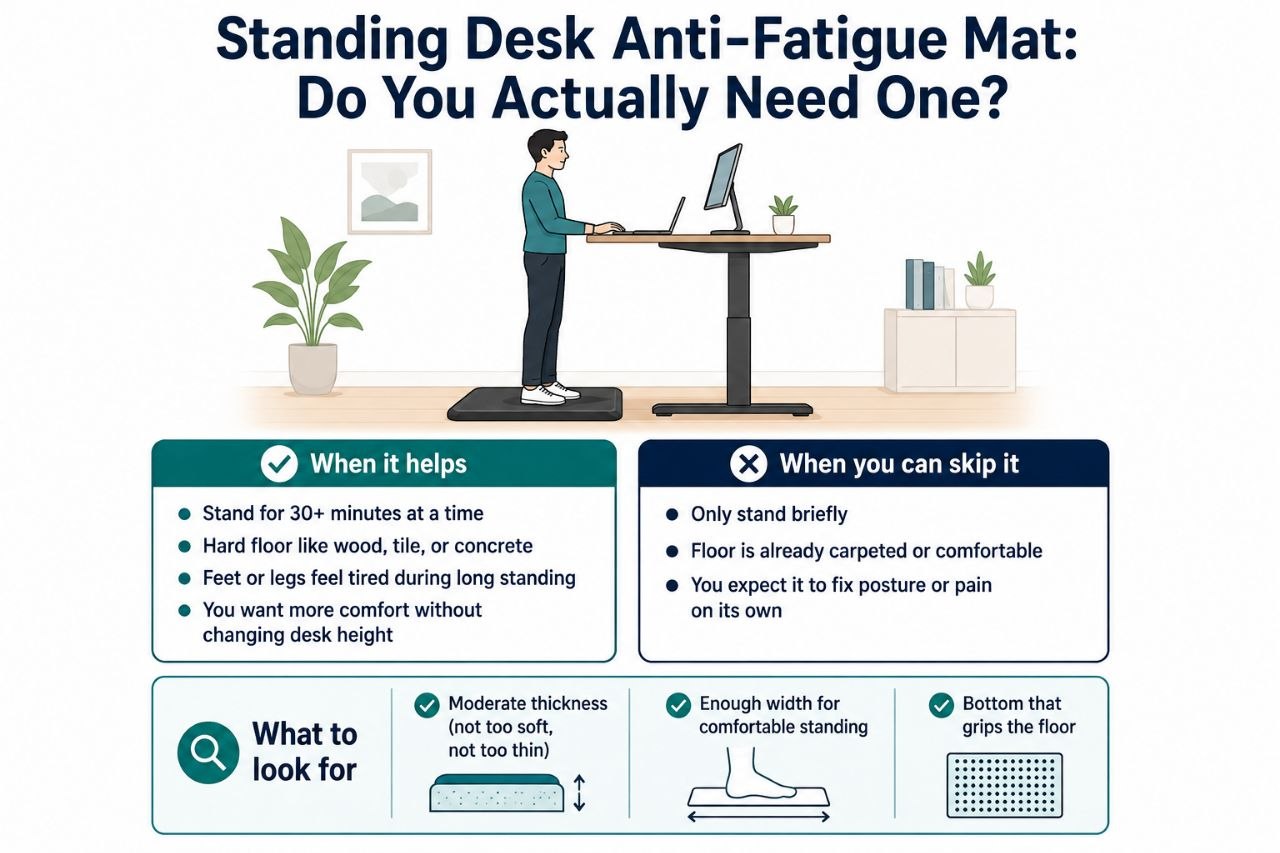
A good reason to get an anti-fatigue mat is simple: you stand for long stretches and your feet, legs, or lower body start to tire in a way that a mat could plausibly soften.
More specifically, it may be worth it if:
- You stand for long work sessions and want a more forgiving surface than a hard floor.
- Your feet or legs feel tired from standing on a hard surface.
- You want a small comfort improvement that is easy to try without rebuilding your setup.
It may be less worth it if:
- You stand only briefly and move around a lot.
- Your current floor surface already feels fine.
- You expect the mat to solve a bigger posture problem that is actually about desk height, monitor position, or how long you stand at once.
One practical caution
An anti-fatigue mat is not a replacement for good standing habits. If you stand too long without changing position, shifting weight, or taking breaks, a mat helps but does not remove the basic issue. The mat is a comfort layer, not a substitute for varying your posture.
Also, size matters more than people expect. A mat that is too small for your natural stance area may be less useful than a slightly larger one that lets you shift comfortably.
What to check before buying
- Thickness and firmness together, not just thickness alone.
- Surface feel — if possible, stand on something similar before buying, because underfoot feel is personal.
- Size relative to how you stand. Big enough to move a little without stepping off constantly.
- Cleaning and maintenance. A mat you stand on all day will need occasional cleaning; some are easier to wipe than others.
- Non-slip bottom. If the mat shifts on your floor, it becomes a nuisance instead of a comfort improvement.
Bottom line
An anti-fatigue mat is worth getting if you stand for long stretches and want a more forgiving surface for your feet and legs. The useful details are thickness, density, and underfoot feel — not just “get a mat.” A good mat is one that feels supportive over a real work session, not just comfortable for the first five minutes.