Last updated: September 2026 · Written by Hemi
Desk height is one of the quiet foundations of comfort. If the surface is too high, shoulders shrug and wrists extend. If it is too low, you hunch toward the screen. Chair height, keyboard height, and monitor height all move together — but the desk is often the fixed piece people forget to measure. This guide is a body-fit framework, not a product ranking.
Why Desk Height Matters
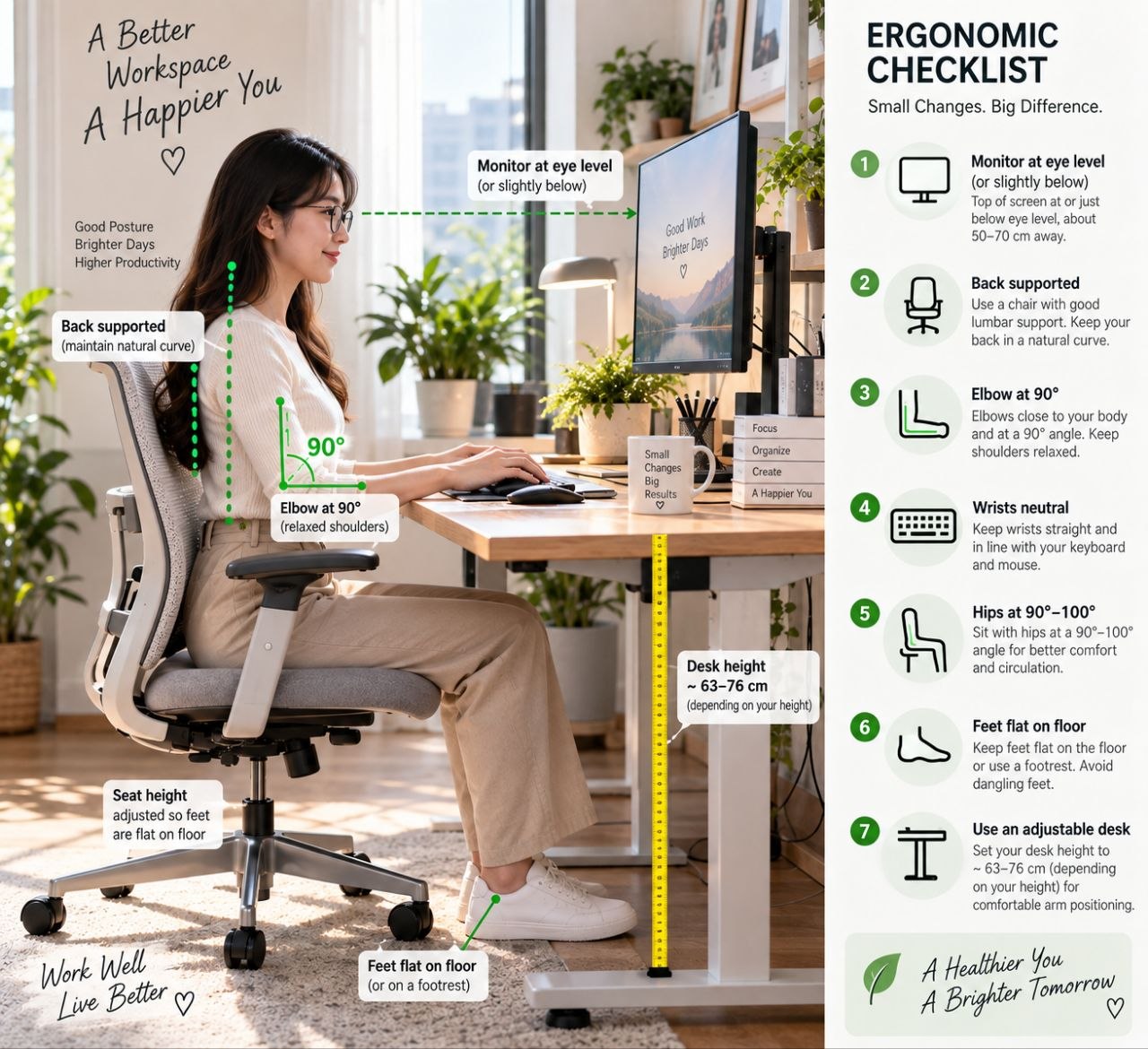
A workable target for seated desk work is roughly this: feet supported, thighs roughly parallel to the floor, forearms roughly parallel to the desk while typing, and shoulders relaxed — not lifted toward your ears. When desk height fights that posture, other accessories become expensive workarounds.
Key Measurements to Take
- Floor to elbow while seated with good foot support — a practical proxy for keyboard height.
- Floor to eye level — helps judge monitor placement after the desk is set.
- Desk underside clearance — knees and chair arms need room.
- Desktop thickness and edge shape — matters for clamps (arms, lamps, trays).
Fixed Desks vs Adjustable Desks
A fixed desk can still fit you if chair height, foot support, and monitor height are tuned around it — or if a keyboard tray is appropriate when the desk is clearly too high. An adjustable sit/stand desk helps when multiple people share a workstation or you change postures during the day. Choosing converter vs full standing desk is a separate decision covered in the standing-desk guide.
A Practical Fit Check
- Sit in your working posture, not a posed ergonomic demo posture.
- Type a few sentences. Notice shoulders, wrists, and whether you lean in.
- If you raise the chair to match a high desk, check whether feet still plant or need a footrest.
- After keyboard height feels right, set monitor height so you are not looking down steeply.
Common Misfits
- Desk too high + chair raised + dangling feet.
- Desk too low + rounded upper back toward a laptop.
- Keyboard on a thick desk edge that forces wrist extension.
- Standing height set from a guess instead of elbow height.
Shop the Hemi Life pick
Under-Desk Ergonomic Footrest — Check on Hemi Life.
Bottom Line
Measure first, then adjust chair, foot support, and screen around a desk height that lets your shoulders stay quiet while typing. Accessories help only after the geometry is close.
Shared households should measure each primary user. A desk that fits one partner at seated height may force the other into permanent compromise. Adjustable desks earn their keep fastest in those homes.
Standing height is not seated height plus a round number. Measure elbow height while standing in the shoes or socks you actually work in, then confirm screen height again — standing often changes how you look at the monitor.
Children or shorter teens using adult desks need special care: foot support is mandatory if the chair is raised to reach the surface. Without it, the “fit adult desk” becomes a long-term fidget and focus problem.
Document your measurements once you find a fit. The next time you move apartments or change chairs, you will not be starting from zero.
Related Guides
- Ergonomic Chair vs Regular Chair
- Standing Desk Converter vs Full Standing Desk
- Complete Ergonomic Home Office Setup Guide
If your desktop remains too high, check whether an under-desk keyboard tray would help your working position before replacing the entire desk.